
Care and Respect for Terroir Define the Aged Red Wines of “Viñas de Alange”, a Commitment to Quality under the “Palacio Quemado” Label
The winery is part of the Ribera del Guadiana Wine and Cava Route, a wine tourism itinerary within the Ribera del Guadiana Designation of Origin.
An estate with centuries of history gives its name to an Extremaduran wine whose quality transcends borders: “Palacio Quemado.” A symbolic name that identifies a company, “Viñas de Alange”, founded in 2000 as the result of the determination of two families, the Losada and the Alvear, to honor tradition while embracing innovation in order to produce high-quality red wines that reflect generations of work in this corner of southeastern Badajoz province.
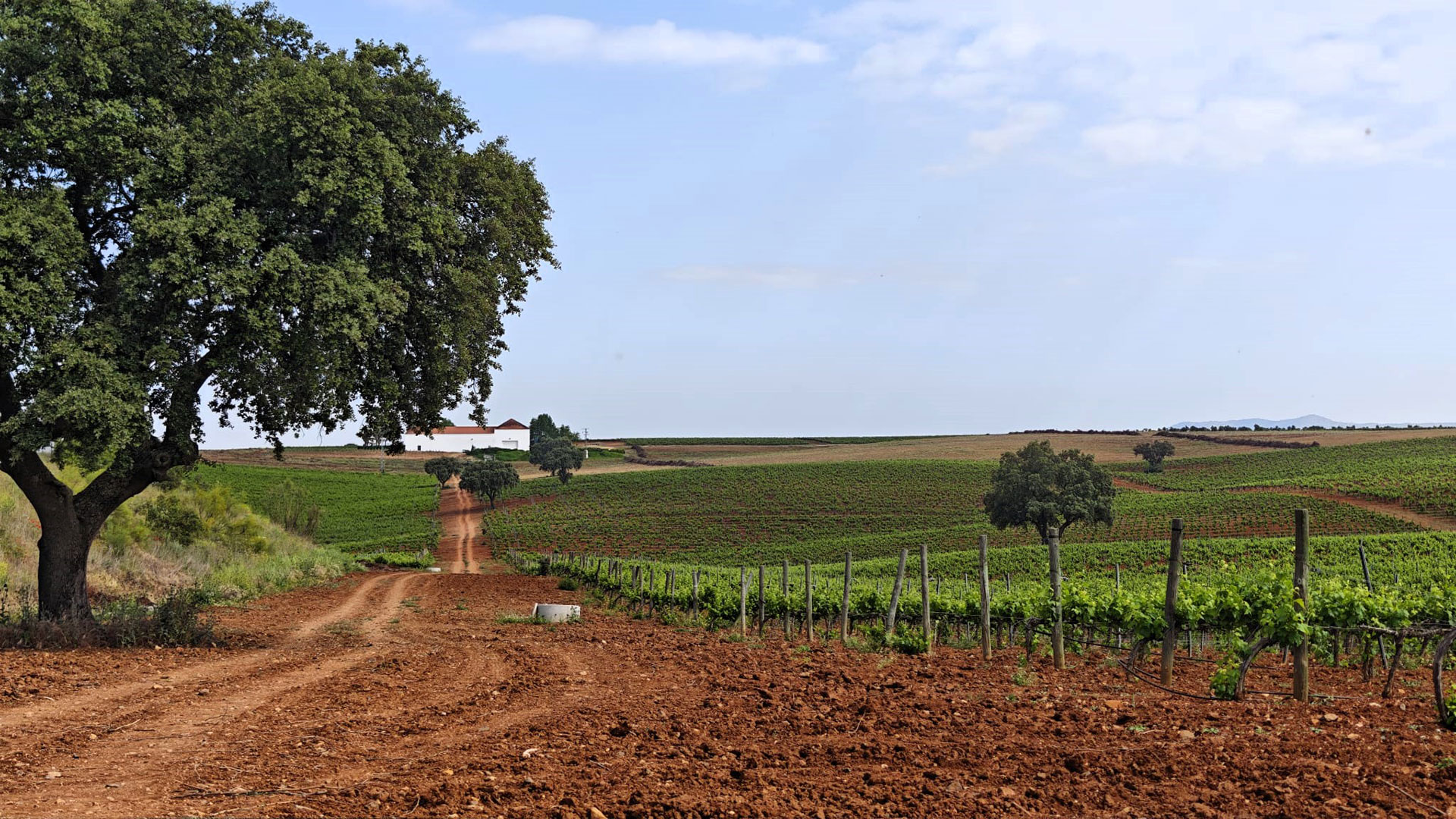
“Palacio Quemado” is not just an estate, a vineyard, a wine, or a location on the map. It is the result of knowledge, experience, and love for a land of clay and limestone soils that provide the distinctive character of the 400,000 bottles produced annually by this Extremaduran winery, which is part of the Ribera del Guadiana Wine and Cava Route.
If terroir is defined as the combination of soil, climate, grape variety, and human influence, at “Viñas de Alange” all four elements contribute the distinctive component of the aged red wines carefully crafted by the hands of its workers.
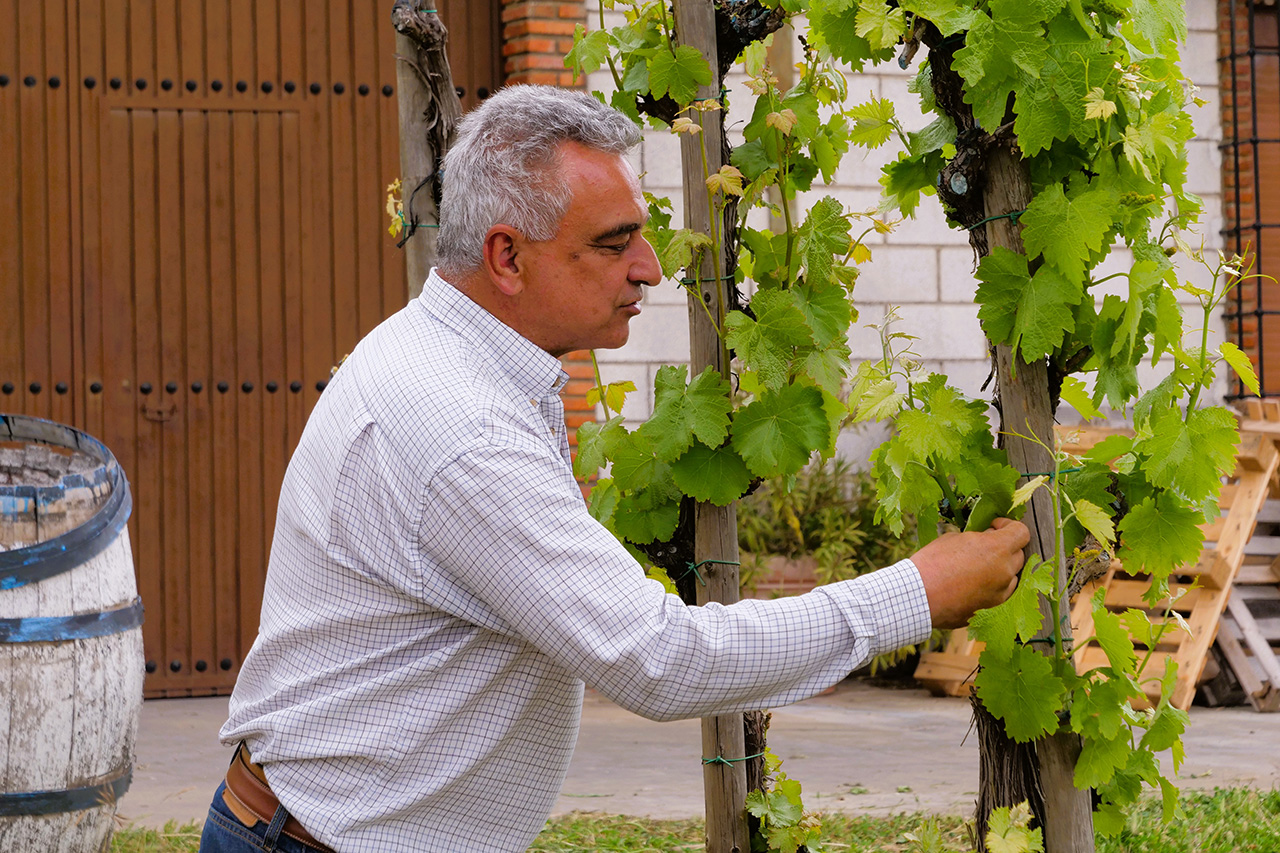
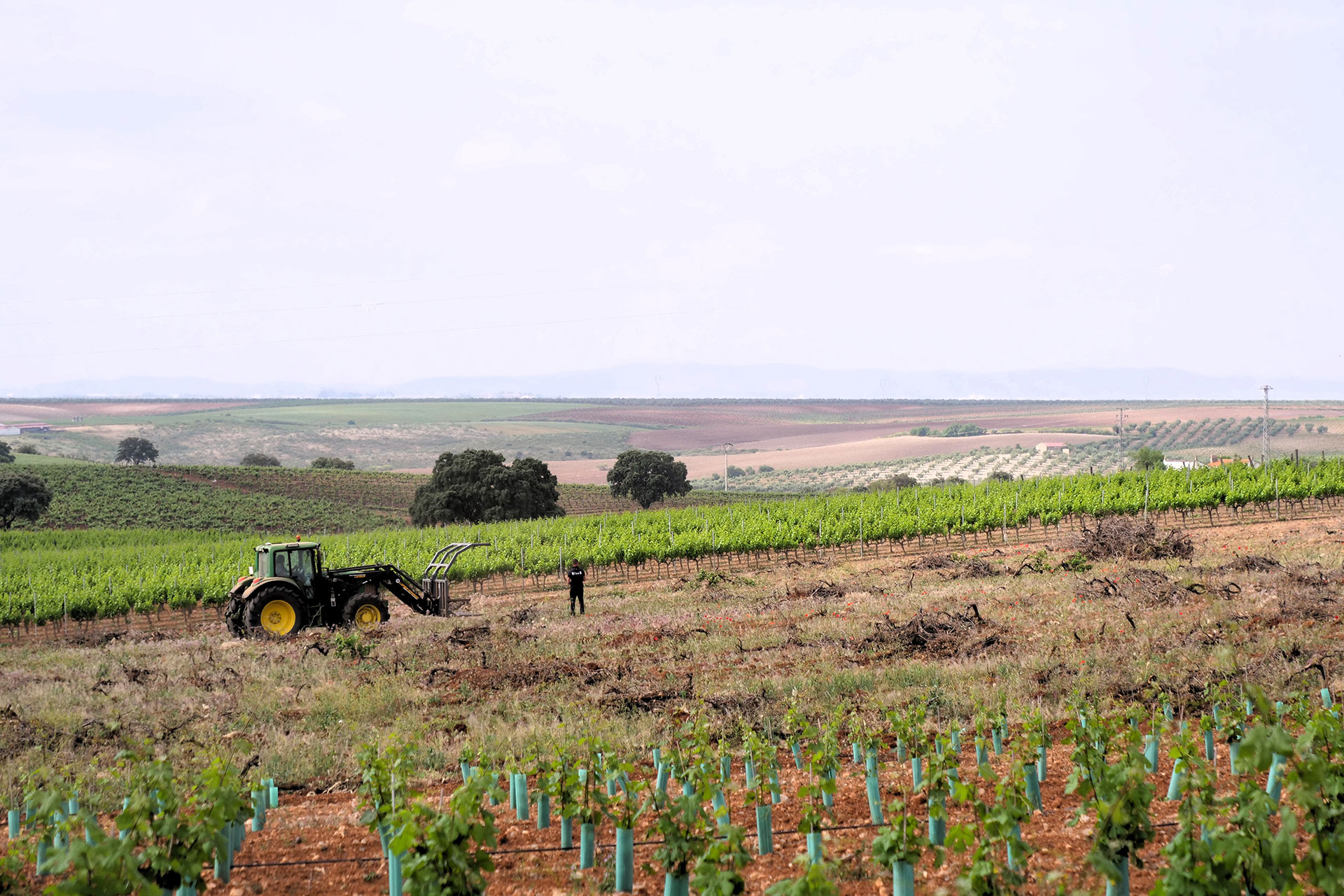
“Everything we do involves wood,” explains the winemaker of “Viñas de Alange”, David Rodríguez, who notes that the winery’s philosophy is a commitment to red grape varieties across more than ninety hectares of estate-owned vineyards, from which all their wines are produced.
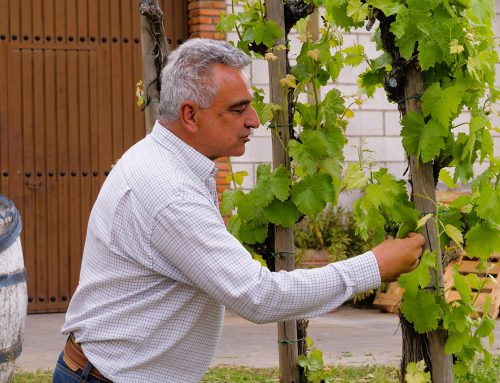
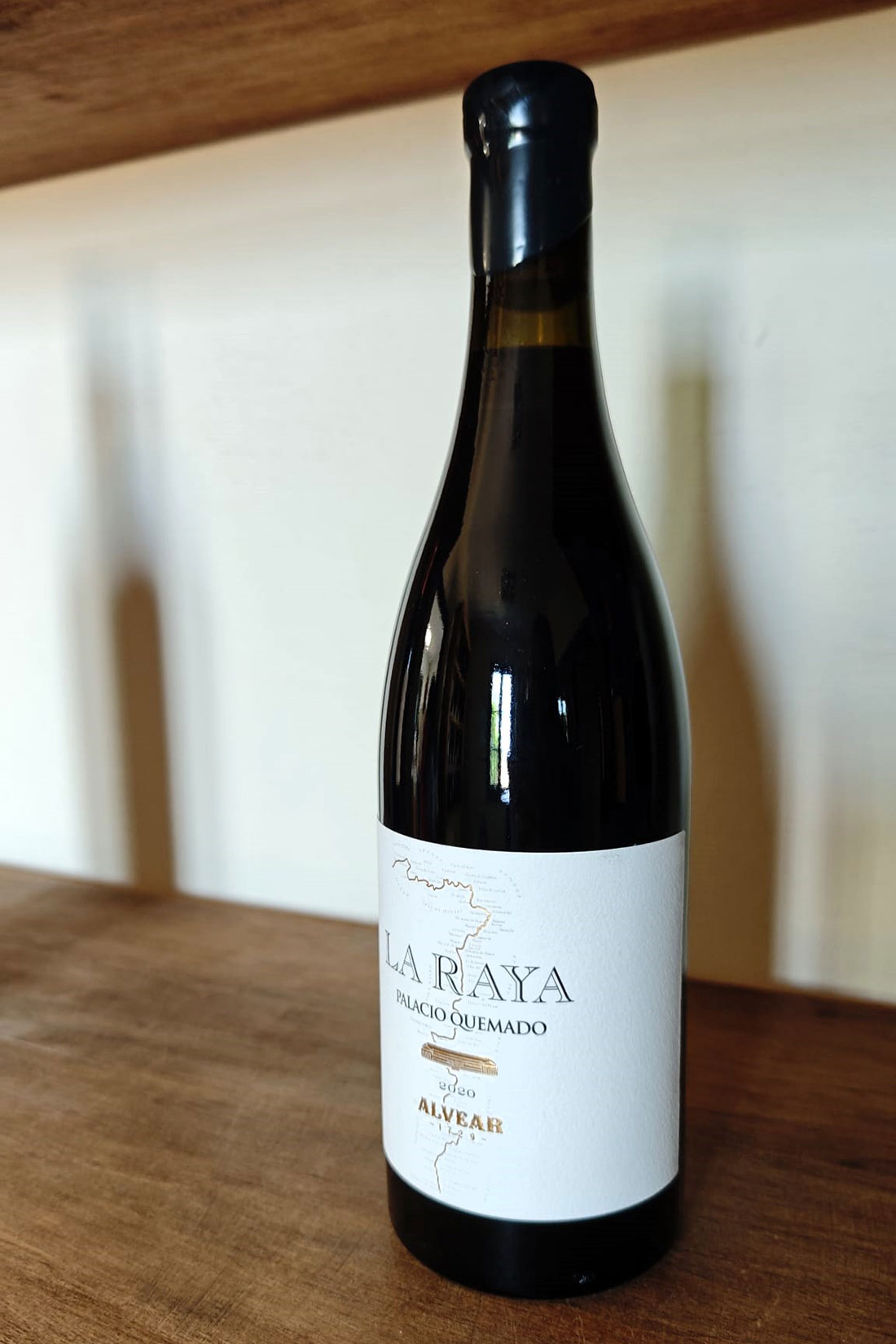
A small garden featuring different varieties presides over the entrance to the winery. Although most of the vineyards are planted with Tempranillo, they also work with Syrah, Cabernet, Garnacha Tintorera and Garnacha, as well as Portuguese varieties already established such as Trincadeira and Touriga Nacional. A mosaic whose pieces allow them to produce high-quality wines under the Ribera del Guadiana Designation of Origin, such as the winery’s flagship “Palacio Quemado,” as well as “Zarcita” or “Raya,” a wine that brings together the winemaking traditions of Alentejo and Tierra de Barros, fermented in concrete tanks and aged in French oak foudres.
ATTENTION TO EVERY DETAIL
Every detail is carefully looked after, and research and innovation, alongside respect for the land, guide the winemaking process. Rodríguez explains that years may pass from the planting of a new variety until it is decided whether it is suitable.
“We don’t know how it will adapt. We have to understand the variety and see, both technically and in the vineyard, how it evolves in order to get the best out of it,” he says. This precise work is currently being carried out on two small plots planted with Alfrocheiro and Touriga Franca.
Nothing is left to chance on land defined by clay and limestone soils, which shape the wines of “Viñas de Alange”: not the harvesting machine with its sorting table that ensures the grapes arrive intact to the hopper; not the early start of the harvest on August 3 (while it usually begins around the 15th in the area); nor the nighttime harvesting to prevent fermentation in the trailers.
Every stage of the process is carefully managed: alcoholic fermentation, malolactic fermentation to soften aggressive acidity… an acidity also influenced by the limestone soil, which gives the grapes naturally balanced acidity and low pH, meaning that no acid additions are required in the winery.
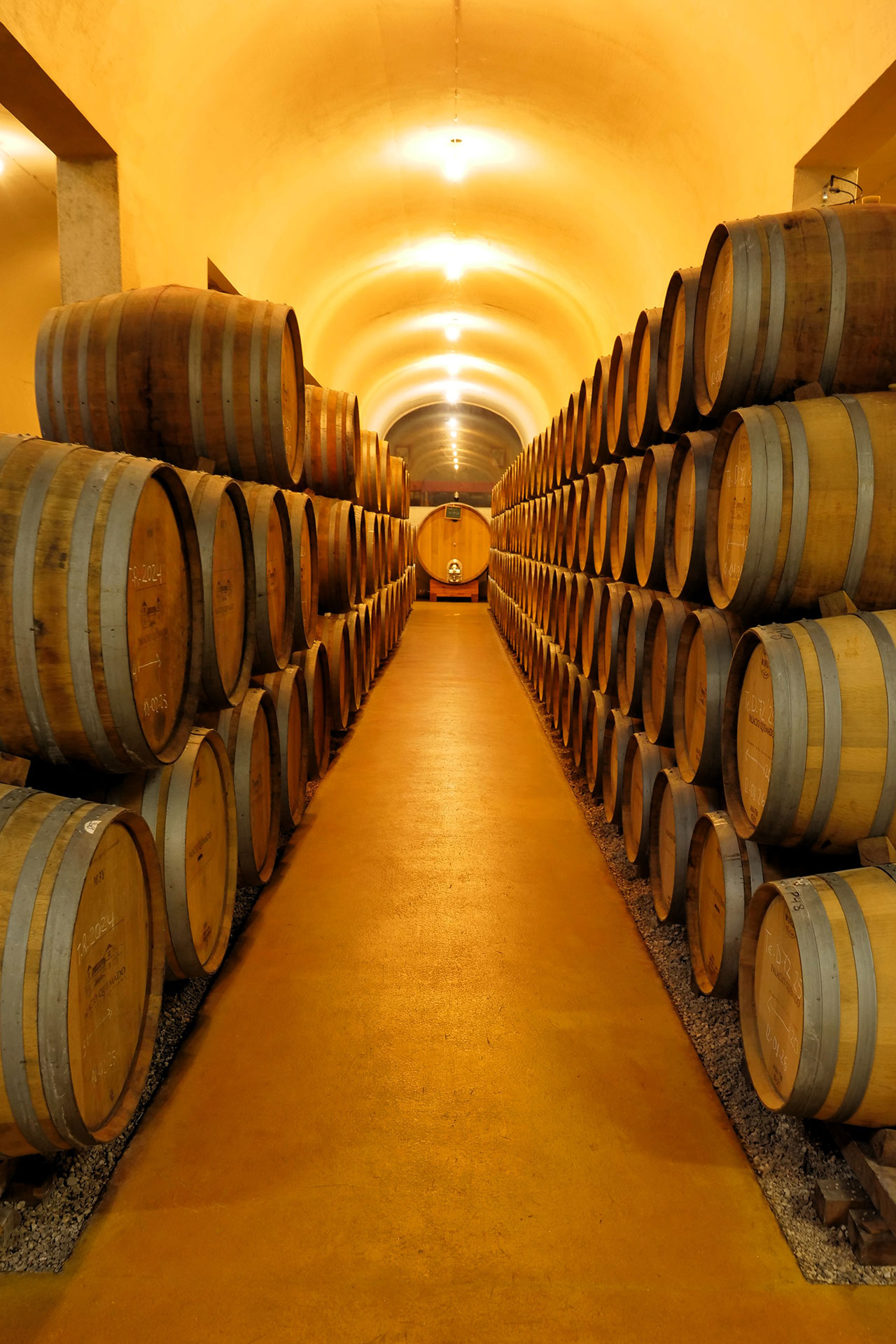
“Each wine is made separately; we do not blend plots,” notes the winemaker, who emphasizes that this separation is also maintained in the American and French oak barrels used by the winery, of which there are around 1,000.
For Rodríguez, wine “is a living being,” which is why tasting by the technical team is essential to determine its quality and final destination (whether reserve, crianza, or oak-aged). For this decision, they also rely on the experience of a leading figure in the sector, Portuguese winemaker Luis Lopes.
Three types of barrels house the winery’s wines, with different capacities to hold different styles. Larger barrels are used for more aromatic varieties, allowing less contact with wood and better preservation of the grape’s identity. Smaller barrels are used to tame more powerful wines. “The most important work is done in the vineyard; we try to respect the grapes as much as possible,” Rodríguez states.
The maintenance of these vessels in which the wine rests is meticulous, as is that of the bottling machinery, equipped with microfiltration cartridges to prevent contamination. This exhaustive care throughout the entire process allows the winery’s team to offer high-quality red wines that also undergo bottle aging, respecting their natural timing.
Thus, through respect for history, experience, knowledge of the soil, understanding of the grape, and the care of those who craft the wines, a unique terroir is created, one that produces distinctive wines with their own character and a deep pride in Extremadura.